
 By Rick Murray, President and CEO, ACNSC
As drivers in Arizona, we’re doing better than ever behind the wheel.
Until we’re not.
Arizona lost 1,156 people in traffic crashes in 2025. While that represents a 5.2% decline from 2024 and marks the third-consecutive year traffic fatalities have fallen, the number remains near historic highs.
Those deaths had many causes and contributing factors. Speeding was one of them. According to the Arizona Department of Transportation, speeding was a factor in crashes that resulted in 367 deaths and 19,831 injuries last year.
At Arizona Chapter National Safety Council, we believe in providing education and advocacy to reduce injuries and save lives in the workplace, at home, and on the road. When we consider a roadway safety measure, our focus is on whether it helps prevent serious injuries and deaths.
Automated speed enforcement cameras are a tool worth having in that conversation: the goal is to slow down drivers.
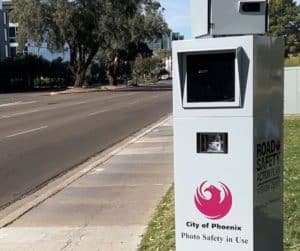
Phoenix reinstated its Photo Safety Program in February as part of the city’s broader Vision Zero Road Safety Action Plan. The program includes cameras that rotate through corridors with histories of speed-related crashes, as well as cameras in school zones.
During the program’s first 30-day warning period, nine corridor cameras recorded more than 70,000 speeding events.
If drivers know speed limits are being enforced consistently, they slow down. And when that happens, we reduce one of the factors contributing to serious and fatal crashes on Arizona roads.
Speed cameras are not Flock cameras
Recent concerns in Arizona and nationwide about Flock cameras have raised legitimate questions about surveillance, data collection, and privacy. Attorney General Kris Mayes recently announced a statewide review of these systems and their potential impact on Arizonans’ privacy rights.
Privacy concerns deserve serious attention. But those concerns shouldn’t blur an important distinction: speed cameras and Flock cameras do different things.
Speed cameras enforce traffic laws. They measure vehicle speed and activate when a vehicle exceeds the speed limit. The camera captures information about the violation, which is reviewed and used to issue a citation when appropriate.
Flock cameras are automated license plate readers designed to help law enforcement investigate crimes. They are motion-activated and continuously log passing vehicles whether a law has been broken or not, capturing license plates and characteristics including make, model, and color. That information is stored in a searchable database that law enforcement can use to identify vehicles associated with crimes, stolen vehicles, wanted suspects or missing persons.
Support for automated speed enforcement needs to come with expectations for how programs operate.
Phoenix offers a useful example. The city says it selects camera locations using safety data, focusing on roads with serious and fatal injuries, speed-related crashes, and known speeding problems. Camera locations are publicly available, and Phoenix Police reviews recorded events before citations are issued.
Arizona voters can weigh in on photo enforcement this year by way of Proposition 319, which will appear on the November ballot. The National Safety Council’s role is not to tell Arizonans how to vote. Our role is to keep safety and evidence at the center of the conversation.
Speed cameras are just one piece of the roadway safety pie. Safer roads will also depend on better road design, education, enforcement, and drivers making safer choices behind the wheel.
When it comes to speed cameras, the most important measure of success isn’t how many drivers receive a ticket. It’s how many more people make it home safely.
This article originally appeared in the Phoenix Business Journal on September 25, 2026.