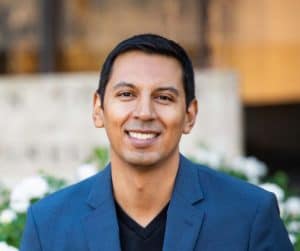
By Eric J. Rodriguez. Eric is a speaker at Arizona Chapter National Safety Council’s 2026 Southwest Safety Conference. His presentation, Leading Safety in the Human Era , reframes safety as a shared value that helps organizations adapt, innovate, and protect people at the same time.
The refinery operator who spots a leak but stays silent.
The supervisor who knows the procedure is wrong but still follows it.
The engineer who designs a perfect system that no one trusts.
And yet incidents still happen because technology does not create safety. People do.
After years of working in high-risk manufacturing and operations, I have learned this: the organizations with the strongest safety records are not the ones with the most advanced systems. They are the ones where leaders build trust, make space for hard conversations, and treat safety as a shared responsibility rather than a compliance metric.
The Culture Problem Your Metrics Can’t Reveal
Most safety management systems look strong on paper. Procedures documented. Audits completed. Training signed off.
Then an incident occurs, and the investigation reveals what the data missed: workers knew about the hazard but did not speak up. A supervisor felt pressure to keep production running. A new employee was unclear but afraid to ask.
The gap is not in the system. It is in the culture.
Research in oil and gas shows that high-trust environments correlate with fewer recordable injuries and containment failures, findings echoed by multiple industry safety studies. The same research found that care matters more than competence when building that trust. When leaders demonstrate genuine care and openness to listen, people speak up.
I learned this through failure. I once worked at a site that set a company record for days without a recordable injury. Financial bonuses were tied to our safety performance. We celebrated every milestone.
Then the investigation came. There had been multiple unreported injuries during our record stretch. Employees chose silence to protect their coworkers’ bonuses.
We had built a system that rewarded the appearance of safety rather than its practice. Research confirms what we learned the hard way: linking bonuses to safety metrics drives underreporting and incident reclassification.
When safety becomes about the number on the board, you lose the culture beneath it.
Three Shifts That Rebuild Trust
1. From Transparency as Policy to Transparency as Practice
Trust is not built through town halls or policy rollouts. It is built through small, consistent actions.
- Acknowledge mistakes and focus on learning, not blame.
- Follow through on commitments after incidents and near misses.
- Be visible on the floor, not just in meetings.
- Share the reasoning behind safety decisions, especially difficult ones.
The best safety metric is not a perfect score. It is a team that speaks up when something is wrong.
2. From Technology Rollout to Human Integration
As an automation engineer, I designed SIL (Safety Integrity Level) projects at the refinery. These were high-priority systems meant to prevent catastrophic failures. The work could not happen in a conference room.
We walked the site. Talked to operators. Listened to what they had learned over the years of running equipment we were about to replace or redesign. The operators knew things the engineers did not: how equipment behaved under stress, near misses that never made reports, workarounds that had become second nature.
Their insights shaped better systems. Not because we asked for buy-in, but because we genuinely needed their expertise.
Before rolling out new technology, ask:
- Have we explained how this protects people, not just what it does.
- Have frontline workers tested it and shaped it.
- Are we measuring adoption and trust, or just compliance.
I saw the cost of skipping these steps when we introduced ergonomics software meant to reduce strain and injury. We failed to get ahead of the messaging. Employees saw surveillance, not support. Trust collapsed.
We rebuilt by centering human stories. Stories about how the tools helped people work more comfortably and go home healthier. The technology had not changed. The narrative had. Work comes and goes. Families are the ones who carry the cost when we do not get safety right.
3. From Crisis Leadership to Daily Practice
Safety leadership happens in everyday moments. The tone of a pre-shift meeting. The response to a question. The willingness to pause work when conditions change.
Daily practices that build culture include:
- Ask what you need to stay safe today instead of are you being safe.
- Recognize people who intervene or report hazards, even when nothing happens.
- Model the behavior you expect.
- Coach supervisors to investigate with curiosity, not judgment.
What Innovation Actually Requires
Innovation in safety is essential. But innovation without connection is noise.
The best safety technology does not replace human judgment. It enhances it. A dashboard matters only if leaders use it to start conversations. A new procedure works only if people understand why it exists and believe it will protect them.
Evaluate new tools by asking whether they give people better information, clearer choices, and more control over their safety.
What Safety Leadership Requires Next
The future of safety leadership is not a choice between technology and people. It is about using technology to amplify what people do best: communicate, collaborate, and care for one another.
Safety is not something you manage. It is something you build, one conversation, one decision, one action at a time.
This week, ask yourself: what is one thing I can do to strengthen the human side of my safety culture?
That answer is where real safety leadership begins.
Eric J. Rodriguez is a human-centered futurist, keynote speaker, and leadership advisor who helps organizations navigate change while keeping people at the center. He began his career as an engineer in oil and gas and semiconductor manufacturing, where his work in controls and automation focused on making human jobs safer. He later served as an operations manager and led global teams at Intel, working at the intersection of technology, people, and large-scale systems. Recognized as one of Arizona’s 40 Under 40 and a Young Hispanic Corporate Achiever, Eric brings a rare blend of technical expertise and human insight. Through his ACT Framework™ (Adapt, Connect, Translate), he equips leaders to build trust, resilience, and cultures that thrive in an era of constant innovation.