 OSHA Safe + Sound Week is a nationwide event that celebrates the successes of workplace health and safety programs while encouraging organizations to strengthen their own efforts. At Arizona Chapter National Safety Council (ACNSC), it’s also an opportunity to recognize individuals whose work demonstrates what effective safety leadership looks like in practice.
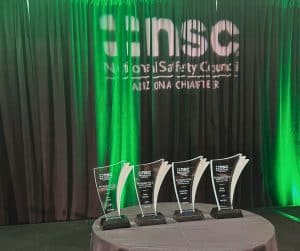
Earlier this year, during our 2026 Southwest Safety Conference, we honored four professionals with the Howard Pyle Safety Award. While their careers span different industries and organizations, they share one thing in common: they found better ways to protect people, and they created results that continue to benefit others.
Their stories offer lessons every safety professional can apply.
Lesson 1: Build relationships, Not Barriers
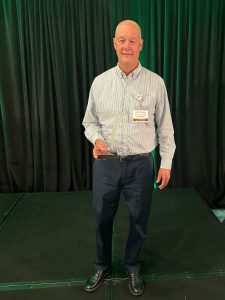
For more than 35 years, Darin Perkins has helped shape workplace safety across Arizona.
During his 22-year career with the Arizona Division of Occupational Safety and Health (ADOSH), Darin served as a Compliance Officer, Industrial Hygiene Supervisor, and Division Director. Throughout his career, he earned a reputation for combining technical expertise with practical leadership.
As ADOSH Director, he strengthened relationships between regulators, employers, and safety organizations, creating greater trust and improving compliance across the state. Later, as Environmental Health and Safety Manager for Central Arizona Project, he built a culture where safety professionals were viewed as trusted partners by employees in the field.
Even in retirement, Darin continues contributing to Arizona’s workplace safety efforts by helping develop state guidance on heat exposure and trenching safety.
His career reminds us that strong safety cultures are built through collaboration, credibility, and consistency.
Lesson 2: Persistence Creates Opportunity
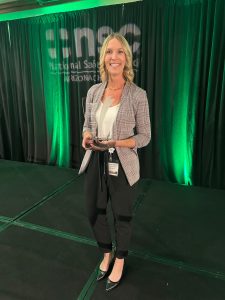
When the City of Glendale was identified as one of the nation’s deadliest areas for pedestrian fatalities, Cassandra Johnston, Traffic Education Program Manager for the City of Glendale, Arizona, refused to accept the status quo.
Her goal was to bring the National Safety Council’s Alive at 25 defensive driving program into local high schools.
The first attempts didn’t work.
Emails to principals and district leaders went unanswered. Instead of giving up, Cassandra adjusted her strategy. She partnered with school resource officers, connected directly with teachers, and adapted the four-hour course into five one-hour sessions that fit school schedules.
Today, Alive at 25 is taught in all nine Glendale high schools, reaching more than 2,000 students each year. Since the program’s full implementation, pedestrian and vehicle-related fatalities have steadily declined.
Her success is a reminder that effective safety programs often require creativity, persistence, and the willingness to adapt.
Lesson 3: Culture Changes Everything
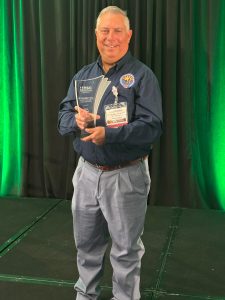
When Chris Kriebel became Safety Administrator for the Arizona Department of Forestry and Fire Management, the agency had never had a centralized safety program.
He changed that.
Chris developed job hazard analyses for every position, authored the agency’s first comprehensive safety manual, improved fire protection systems, expanded access to AEDs and emergency medical training, and secured additional life-saving equipment for field crews.
His greatest accomplishment, however, was creating a culture where safety became everyone’s responsibility.
Chris established the department’s first cross-divisional safety committee, bringing together employees and leadership to discuss incidents, near misses, and opportunities for improvement. The result is an organization where safety conversations happen routinely and employees actively help shape solutions.
Lesson 4: Safety Extends Beyond the Workplace
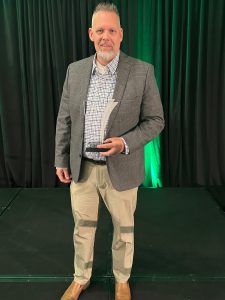
Dave Schad has spent more than three decades protecting others through military service, firefighting, emergency response, and healthcare.
As Manager of Safety Services at Terros Health, he transformed workplace safety from a compliance exercise into a daily practice centered on planning, preparedness, training, and employee engagement. His efforts helped reduce incident reports by 30 percent at pilot locations while strengthening safety culture across the organization.
His commitment doesn’t stop there.
After losing a close friend to a fentanyl overdose, Dave created one of Arizona’s most comprehensive opioid response education programs. More than 16,000 people have completed the training, and nearly 27,000 Narcan kits have been distributed through the initiative.
His work reminds us that safety professionals often improve lives far beyond their own organizations.
Recognizing Those Who Make a Difference
ACNSC’s Howard Pyle Safety Award recognizes individuals whose leadership, innovation, and commitment have made Arizona workplaces safer.As we recognize OSHA Safe + Sound Week, consider the safety leaders within your own organization or community who are making a lasting impact.
Do you know someone whose work deserves recognition?
Help us celebrate Arizona’s safety leaders by nominating an individual or organization for the Howard Pyle Safety Award. Learn more and submit a nomination at https://acnsc.org/awards/.